Cremation Benefits
As the years go by, more and more people are starting to choose cremation over the traditional way of being buried after they die.
Interestingly, the 2017 National Funeral Directors Association Cremation and Burial Report found that about 50.2 percent of Americans chose cremation in 2016, while 43.5 Americans opted for a traditional burial. The report predicts that by the year 2035, over 78.8 percent of Americans will choose cremation over traditional burial.
However, interestingly enough, many Americans are still unaware of many of the benefits associated with cremation. For example, 32 percent of people who choose cremation don’t have a funeral service or memorial service. And that’s because about 52.2 percent are not aware that they can still plan a cremation funeral.
Our role as a cemetery and funeral home, and as funeral directors is to help make sure families in South Florida understand all the options available to commemorate their loved one’s lives. so today, we’ll be looking at some benefits of cremation and hopefully answer some questions about this popular choice.
TABLE OF CONTENTS
5 Benefits of Cremation Americans Should Consider
How Does Cremation Work
Is Cremation Right for Me?
5 Storage Options For Cremated Remains
Cremation with Funeral Services
 |
 |
 |
5 Benefits of Cremation Americans Should Consider
When pre-planning your own burial or making decisions about the burial of a deceased loved one, burial or cremation is one of the first things you should decide. We found a handful of benefits of cremation to help your decision.
-
Money-Saving Benefits
The cremation process, depending on where it’s being done, costs much less than buying a casket and a larger burial plot. Depending on many factors, a cremation costs around $2,000, and you can shop for a very nice urn for around $100 to $200, compared to a casket that could cost two, three or four times that total amount, and it’s obvious that cremation is the more cost-saving option.
-
Similarities Combine Convenience and Tradition
Cremains placed in an urn will cost much less than buying a casket, but some people still choose to do a burial. Burying the urn at a gravesite or at a crypt, like at The Gardens of Boca Raton – Cemetery and Chapel is quite common. Also, you can still have a funeral service for either method, so little changed in that manner. Family members can choose to go with the less expensive route of cremation, yet still, hold onto tradition by burying those cremains.
-
Easier to Handle
For those that don’t want a complicated funeral service held, they can choose to have a memorial service at a peaceful location, and they can choose to have their ashes spread there, as opposed to burial. But even burying cremains in an urn or entombing them in a crypt is easier than a traditional funeral.
-
Go Green! – Cremations Take Up Less Space
As the earth’s population grows, there are more and more burial plots needed, which means land is being used that can’t be reused at a later date. By choosing cremation, you can be buried in a smaller site, or you can choose to have your cremains entombed at a place like The Gardens of Boca Raton – Cemetery and Chapel. As a matter of fact, it’s even common to have multiple cremation urns buried in one family plot or crypt.
-
A More Popular Choice
This sounds like an odd benefit, but as more and more people choose cremation over traditional burial, it’s becoming a trendier choice. The more people that do choose cremation, the more people that don’t understand it are exposed to its benefits.
Cremation with Services
Most of us are familiar with the concept of direct cremation, which basically means the cremated remains are handed to the family without a memorial service. Choosing cremation with services can help families have a more comforting experience as they prepare to say goodbye to their loved ones.
Having a cremation with services has advantages on its own, some of the benefits of having a cremation with services include:
- Memorial Service – that allows friends and family to commemorate their loved ones and celebrate the life of the deceased.
- Less Expensive – a cremation service is less expensive than a traditional funeral service. Choosing cremations helps families eliminate many costs associated with funerals such as the casket, headstone cost, and gravesite.
- More Options – there are plenty of cremation storage options that go from family estate benches, cremation jewelry, to cremation beads, and beyond.
While there are several benefits of cremation over burial, remember that you can actually still choose both. You can be cremated and then choose to have that cremains buried or entombed. The Gardens at Boca Raton Cemetery and Chapel will help you with whichever decision you make, and we’ll walk you through all the steps of burial and/or cremation.
How Does Cremation Work?
One of the more interesting aspects of our work is doing the cremation of a loved one. People often ask how a cremation works, and what’s the cremation process exactly?
When someone is cremated, they’re not just placed in open flames.
They are first placed in a temporary fiberboard box, what we call a temporary casket. Then that container is placed into something called a “retort”, which is the brick oven that is made just for bodies, and it fits just one container at a time.
The container goes in on a conveyor and goes down onto a mesh grate inside the retort. The flames inside come from the top and bottom of the retort, onto the temporary container, at an incredibly high temperature of 1,500 degrees Fahrenheit – for 90 minutes. This really intense heat – for a long time period – will help reduce the body down to just its basic elements and some bone fragments. The heat incinerates everything in the body’s soft tissues, while also calcifying the bones until they crumble.
After that 90-minute heating period, we then allow for a cooldown period, which goes on for another 90 minutes. The entire cremation process in the retort takes three hours from heating to cooling.
Those times are averages, but a lot of factors help decide how long the body should be exposed to the heat, including the body’s height – the weight actually doesn’t matter as much – and the percentage of body fat to lean muscle mass.
Granulation
What’s left on the grate are fragile bone fragments collected on a tray, but those pieces need to be granulated so that it can be given to the family. These are some of the longer/bigger bones, like the femur, hip bone or pieces of the skull, and they are placed into what’s called a granulator.
The granulator grinds it down into fine dust, which is then swept into a bag, except for what’s left over, like foreign items like a hip replacement or a pacemaker. For these reasons, we ask that bodies aren’t cremated while wearing rings or watches. Some of the other non-consumed metal objects, like screws, nails, and hinges that might come from the casket itself are also removed.
We might also find dental work, prosthetics, implants and other objects that we end up manually removing either with forceps or with strong magnets. These metals are all removed and disposed of according to local laws.
That also includes dental work and biohazardous waste that we don’t put inside the cremation bag, which includes fillings and other foreign objects inside the body.
Interestingly, pacemakers are removed before the cremation takes place because of the batteries inside the pacemaker. Those batteries can explode inside the retort and do damage to the brick walls inside the oven. Metal objects that go into the granulator can certainly do some damage to it.
How a cremation works can be broken down into the concept that the body is incinerated at high temperatures with a high, dry heat, which vaporizes most of the body, leaving the remains that gets placed into a bag for loved ones.
Is Cremation Right for Me?
People that plan ahead and make tough decisions early on in order to keep their family from making such decisions in times of grief often pre-plan their funerals.
That could mean anything from telling your family members where you’d like to be buried, whether during informal discussions or in their legal will, but preplanning your funeral could also mean paying for it ahead of time and choosing what happens to your body after you’re deceased.
Cremation is the process in which a deceased body is burned, breaking down the bones and vaporizing soft tissues at high temperatures, leaving just the ashes of the body to be buried or placed in an urn.
End-of-Life Plan: Discussion About Cremation
One of the major questions people ask themselves when preplanning their funeral is if cremation is right for them? What are the advantages of cremation, and what are some of the disadvantages?
Cremation is Less Expensive Than A Traditional Burial
Choosing cremation over traditional burial will save your family a lot of money because they don’t necessarily have to buy certain things. For instance, a traditional casket is not necessary for them to be cremated in, even though a funeral home might try to sell you one.
Also, you might not choose to be buried, instead choosing to have your ashes placed in an urn or spread somewhere. This means you won’t have to pay for a grave site or a tombstone.
You will, however, have to pay for the cremation process, which is much less than traditional burial, but it’s a cost others don’t have to pay.
Not All Religions Approve of Cremation
Death is certainly an accepted event in all religions, but many religions differ on how the body is treated afterward. For the most part, many religions are fine with cremating the remains and either burying the ashes, storing them in a columbarium, or other methods of storing the ashes.
The Ashes Can Be Placed In Several Areas
Urns full of ashes are mobile and shareable. In other words, the family of a deceased person might choose to share the urn, taking turns with it on their mantles or shelves through the years.
Another option is having the ashes of the deceased family member or friend spread someplace that is beautiful and meaningful to the person. But in many states, a permit is required to spread the ashes in certain places, like state and national parks.
An urn of ashes could also be buried in a special place on a family member’s property, where a memorial bench or memorial tablet is placed to remember them by.
Statistics from the National Funeral Directors Association and Cremation Association of North America reports that cremation is becoming so popular that more than half of all funerals will include creation before 2020.
Cremation Storage Options
When people begin considering cremation as an alternative option to traditional burial, they might come across the word “columbarium,” without a clear understanding of just what it means.
A columbarium is a building that has niches all around it where funeral urns are stored. A columbarium can also be considered just one niche use to store one funeral urn.
With that in mind, where else can someone store cremains?
Five Storage Options For Cremated Remains
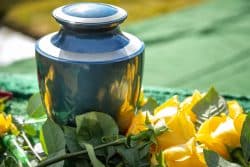
While a columbarium is a common place to store cremated remains, there are several other options. Why would you consider other options? Because cremation is often a less expensive option than a traditional burial in a casket. An urn is where cremated remains are placed for final disposition, but for burial, here are a handful of options.
A Columbarium
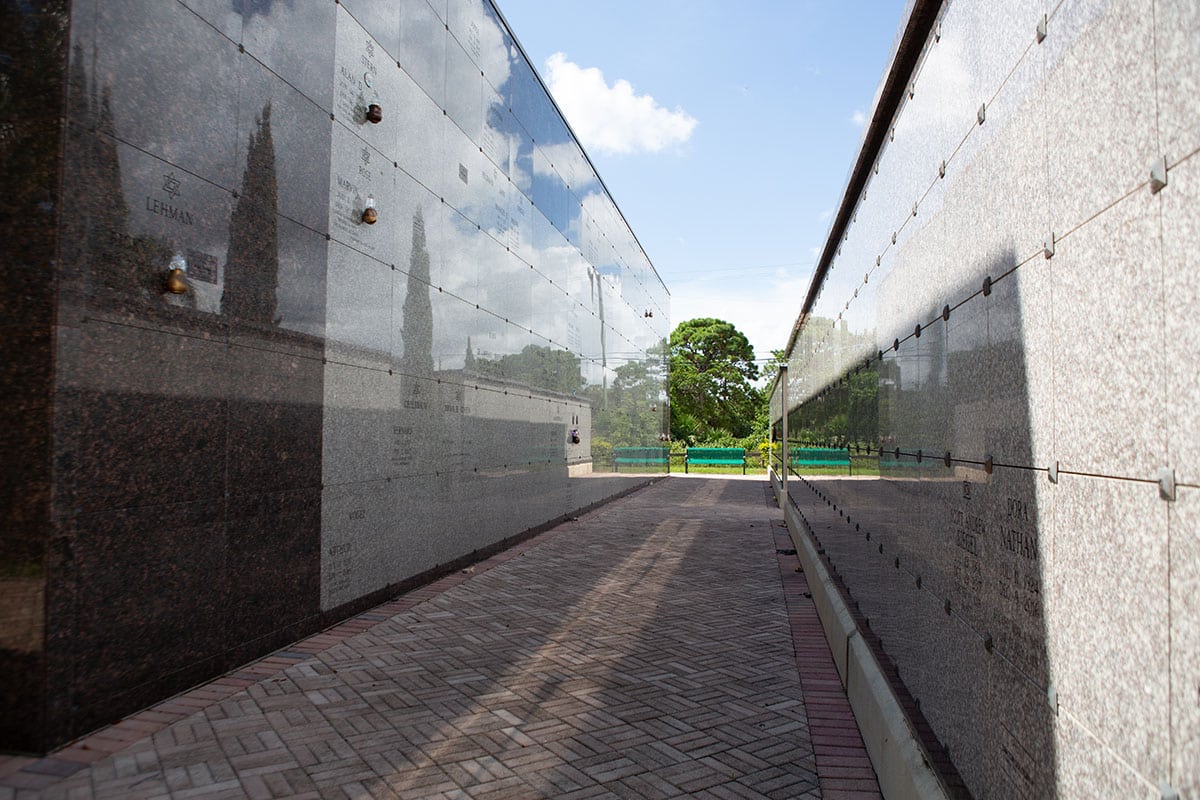
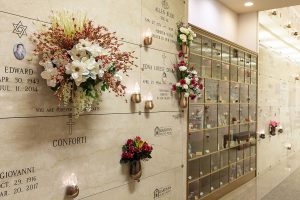
Think of this as a large room in a cemetery or a church, where there are dozens and dozens of niches – almost like cubbyholes – where dozens of urns are stored. These recessed compartments would be where you’d store urns, so you could visit them as often as you’d like, in a peaceful resting place. You can also personalize the niche with photographs or mementos, commemorating your loved one’s life.
A Burial Plot
Some people might not realize that they can still choose to bury a loved one in the ground, even if they’ve been cremated. Another interesting idea is to bury the urn in the burial plot of another family member, keeping their remains together forever. It’s another cost-effective option.
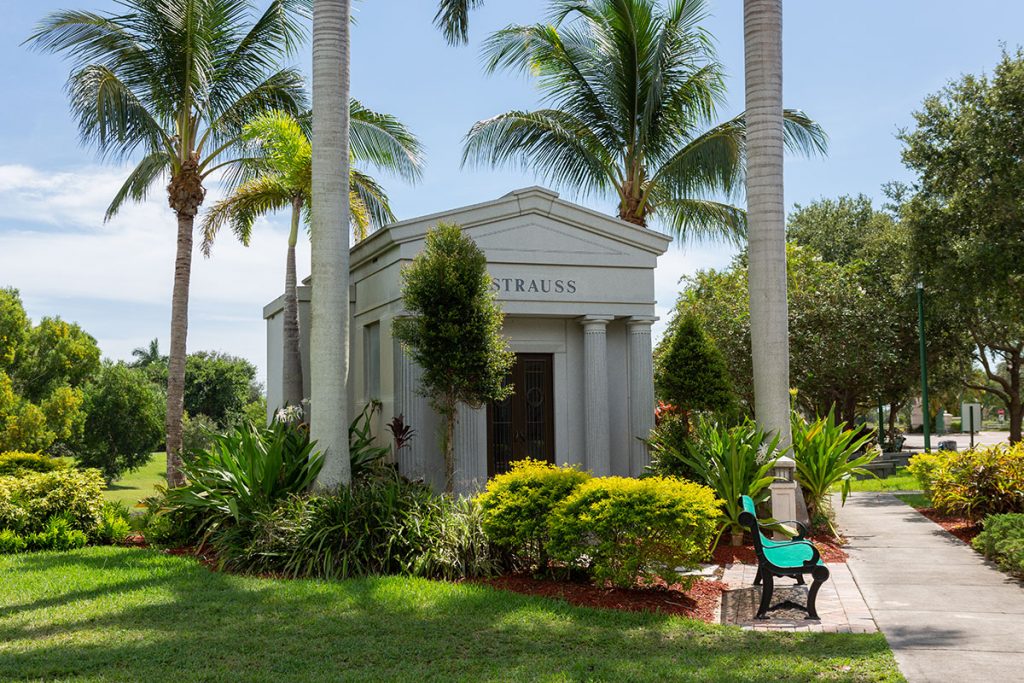
Entombed in a Mausoleum
One can also be entombed in a crypt inside a mausoleum, which would be alongside others entombed in caskets and urns. While this above ground option seems similar to being stored in a columbarium, it’s actually a bit more expensive because it requires more space.
A Memorial Piece
One of the most interesting options you’ll have for storing cremated remains is to choose to hold them inside a memorial object, like a cremation bench, or even inside an actual grave marker. You can also find memorial rocks that have space for an urn, allowing the loved one to rest in nature, in a place you can visit often. Cremated remains can also be converted into glass, by fusing small portions of the remains with molten glass.
In Your Home
Finally, one of the most common options for storing an urn with cremated remains is just inside your house, on a mantle or shelf, where your family can see and remember them often. One reason this is a popular option is so that the urn can be shared amongst the other members of the families and their houses. For instance, if a parent dies, their grown children can share storing the urn over their fireplaces in their own houses.
While a columbarium is a relatively traditional place to store an urn with cremated remains, it’s definitely just one option. If you live in South Florida, discuss all of your options with the people at The Gardens of Boca Raton Cemetery and Funeral Services.
Announcing Cremation Plans
Having end-of-life conversations with our loved ones is perhaps one of the most challenging things we ever do. It may be even harder on them than it is on us. Everyone has a different reaction to coping with the loss of a loved one, even if that loss hasn’t happened yet.
However, planning for the end of life is still important; you want your family to know your wishes ahead of time. You may feel scared, worried, or overwhelmed about having an end-of-life conversation with your loved ones, and that’s completely natural. It’s an emotional topic and is not one that is ever taken lightly, but doing so can help your loved ones as much as yourself in the transition when the time comes.
How Do I Tell My Family I Want to be Cremated?
It’s often recommended that conversations about cremation or burial plans begin while individuals are still in good health, so that their wishes become known and are clear well ahead of time. In a perfect world, spouses would have these conversations early on in their marriage, and then reiterate their wishes to each other, their children, or siblings as the years pass.
However, as time goes on, it may be more difficult to continue having these conversations; or it may be more difficult for loved ones to hear them.
If it is your wish to be cremated it’s best to explicitly state this to your family. It can be helpful to tell them why. If there’s a meaning behind your decision, such as “my mother was also cremated,” it can be beneficial to include this statement so that your family understands the deep personal meaning it has to you.
Why Is Sharing My Wish to Be Cremated Important?
Many of us think that our loved ones should just know things about us. And many times, they do. Our family members know our favorite foods, our favorite movies, where we like to travel to, and so on.
However, when it comes to burial and cremation wishes, it’s often easier to avoid the topic for people than it is to face it head on. This can leave ambiguity when the time comes, possibly causing fights among your loved ones as they fight over what your final wishes apparently were.
Can I Mention My Wish to Be Cremated In My Will?
While it’s not generally advised that you put burial or cremation directions in your will because it may not be viewed for a period of time following your passing, leaving written directions for your wish to be cremated can help your loved ones greatly and can help ensure that your wishes are upheld.
Often, in times of grief, individuals may struggle to remember details of past conversations, or become too emotional to make a decision that differs from their own point of view. Having your wish to be cremated left in a written directive can be extremely helpful. Your loved ones will have something to reference, and you can state again why you wish to be cremated if you’d like to.
Furthermore, if you don’t have your wishes written down somewhere, state law will dictate who gets to make the decision for you once you have passed (the order usually gets designated as: spouse, children, parents, next of kin). Your original written instructions should be left with the executor of your estate or their attorney, and copies should be sent to your loved ones.
The Importance of Pre-planning
Discussing the fact that you want to be cremated is just as important as discussing your medical treatment, the plans for your estate, or making care arrangements for children and pets. It’s a difficult topic for many, but it’s one that should not be avoided. Don’t be afraid to voice your wishes to your loved ones.
If you feel it would be beneficial, you and your loved ones can speak with a funeral counselor to discuss pre-planning arrangements. When there’s a caring professional by your side, this conversation can feel more comfortable and guided. At The Gardens of Boca Raton, our counselors are available to discuss your end of life wishes with your family.
The Different Options to Consider When Being Cremated
Choosing cremation for yourself or a loved one comes with many questions, and you may be wondering what your cremation options are. For many, this is the first time they have had to consider the process of cremation. There are several options both for the physical cremation itself, as well as the final resting place of the ashes. No matter which process you choose, it should be a method you are comfortable with. Discuss each option with your loved ones if you wish, to plan where the ashes will rest after the physical cremation is complete.
It may be a good idea to put these plans in writing to ensure there are detailed directions in place after you have passed. You can leave these directions with your attorney or executor of your estate.
Cremation Options for the Physical Cremation
The process of cremation itself may leave individuals wondering what their options are. Is there a blanket practice that applies to all, or are there ways that you can customize your cremation? What choices do you have, and how do you determine which is right for you? There are several things to consider that will make your pre-planning arrangements easier.
Location
If you are making pre-planning arrangements for funeral funding, you may want to call several funeral homes that offer cremation services, or crematories directly. These facilities will be able to provide price breakdowns, and you can select the location where you wish to be cremated. Choosing the site of cremation will allow you to put aside the necessary funds in advance.
Direct Cremation, Cremation with a Service, or Whole Body Donation
Many people are not aware that they have the option to choose different types of cremation. Again, this can play a considerable role when pre-planning arrangements for funding. It’s a good idea to call various facilities and ask for pricing information so that you can prepare.
Direct Cremation
Direct cremation takes place when there will not be a ceremony, funeral, or service. It is an option for those who do not wish to have a viewing or visitation, and the body will not be embalmed before being cremated. This is typically the least expensive method of cremation, and the ashes will be returned directly to the family or loved ones in the urn or box of their choice.
Cremation with a Service
If you are pre-planning cremation with a service, contact local funeral homes for price quotes. You may choose a traditional service, which is usually the most expensive form of cremation. A traditional service will require embalming and the purchase of a casket if you wish to set money aside for planning funding. The crematory or funeral home should include all costs in this price quote, ranging from the cremation cost itself, the cost of the funeral, body preparation, and more.
Cremation With Body Donation
If you choose cremation with a whole-body donation through a scientific organization, there will most likely be zero cost to you or your loved ones. Whole-body donation is when the deceased donate their body for medical and scientific study and requires a signed contract with a said organization providing your consent in advance.
Donations to medical schools, government bodies, or government-approved scientific organizations may take place. After the body has been examined the cremation process will take place, with ashes being returned to the family within a few weeks.
How You Would Like to be Cremated
Another cremation option to consider, aside from pre-planning arrangements for funding, is the state in which you would like to be cremated. If there is a meaningful outfit you would like to wear, or jewelry you would like with you, make sure this is known to your loved ones and in your written directives.
Any non-combustible items, such as jewelry, will be returned to your loved ones post-cremation. You can leave instructions on who should receive the jewelry or where it should be kept as well. Some individuals may wish to be cremated with a religious item, such as a rosary. These are all cremation options that you have the ability to pre-plan.
Cremation Options for After the Physical Cremation Process
Once you have decided on the best physical cremation process for your needs, your next step will be determining what will happen post-cremation. This is another topic that you should discuss with loved ones in advance, and leave in writing if you’d like. There are several things to consider.
Who Will Collect the Ashes?
Is there a specific family member or loved one that you wish to receive your ashes? A child, spouse, or sibling? You can pre-plan for this. If you have multiple children or siblings, maybe you would like each of them to receive a portion of the ashes. This is something that is best determined in advance to avoid difficult decisions once your ashes are ready to be returned to your family.
How Would You Like Your Ashes to be Stored?
Deciding how you’d like your ashes to be stored is another part of cremation options to consider.
Storing Ashes in an Urn
Some individuals may elect to have their ashes stored in the same urn as a spouse who has previously passed. Others may prefer their ashes to be stored in a particular urn, which you can pre-select if you wish, and provide to your family members.
Spreading of the Ashes
You may wish for your ashes to be scattered in a place that was special to you, or to have them placed in a cremation niche at a moratorium or sacred space. Another option is a cremation burial, if you would like your ashes buried in a specific location or next to a loved one in a cemetery. If this is important to you, be sure to make it known in the pre-planning process.
Environmental Options
In recent years, ecological elements have become increasingly incorporated in regards to post-cremation options. It is now possible to have your ashes collected and buried with a tree seed, set to grow into a magnificent tree. The tree serves as a living monument that your loved ones can care for and watch grow, while also contributing to the well-being of the environment.
Another option for cremation ashes to help the environment is to aid the coral reef. Some organizations accept either all or a portion of cremation ashes and then build structures for a coral reef to latch on to and continue to grow. The coral reef is a crucial part of our eco-system that is quickly disappearing, and environmental enthusiasts have begun choosing this option in increasing numbers.
Deciding on Your Cremation Options
Choosing which cremation options are right for you is a very intimate decision that can take time to make. The Gardens of Boca Raton offers both pre-planning services, as well as services to families who are in immediate need and provide consultations to those considering both cremation and burial.
If you are looking for information on cremation, burial, or funeral services contact us today to speak with a representative. Our team is dedicated to making the planning process as easy and comfortable as possible for you and your family.
Selecting an Urn
When you’re grieving, making important decisions can be a difficult endeavor. Selecting the right urn for your lost friend or loved one is one of those tough choices.
There are many choices and different types of urns to choose from, which can be both helpful and overwhelming at the same time. We came up with a handful of tips to help you select an urn, making one of the toughest decisions a little easier.
4 Tips on Selecting the Right Urn
It’s important to understand that there are so many choices because there are so many different types of people and tastes.
- Decide Where the Urn Will ResideYou know your choice must be practical first, which means you need it to do the job of storing cremated remains before you need it to do the job of looking nice. So ask yourself how you plan to use the urn?
Are you going to display it, like on a mantle or shelf? If so, you’ll want a permanent urn made out of ceramic, glass, marble, metal or even stone.
Is this urn going inside a niche at a columbarium, next to other urns in other niches? If so, then you need to figure out the size and space of the niche before purchasing an urn.
Do you plan to scatter the ashes, which would need a less expensive vessel, since it’s not permanent, or do you plan on burying the urn? These are all questions you should answer first.
- What Kind of Style Fits Your Loved One?Your two main goals when choosing an urn is to find something to store a loved one’s ashes and to honor them with a respectful urn. There are thousands of urn designs, but what fits the deceased’s wishes or personality best? If they didn’t choose an urn or give you directions, then what are they passionate about, or what kind of special interests do you think might help with your selection?
Think about some of these styles and what they might represent to your friend: artistic, handmade, patriotic, religious, themed, whimsical, etc. You can also choose to get it engraved, too.
- What Material Should the Urn Be Made From?There are different materials you can choose from if you are looking for a more traditional urn that’s not necessarily stylized. Here are some urn material options:
- Ceramic
- Glass
- Wood
- Metal
- Biodegradable
Also, remember that you can choose to get a “keepsake,” which is a smaller versions of an urn that can stay in a home after the urn is stored at someone else’s house.
- Decide On an Urn Price PointUrns actually come in all different price ranges, so you should decide how much you’d like to spend on an urn. From a modest price ($50-$100) up to over $1,000 – you can find something you’d like in nearly every price range. The higher priced ones might just have much better craftsmanship, but you’ll be able to find something you like in every price point.
Editorial Disclaimer
I have personally researched and written the content contained in this publication using sources I believe to be reliable and accurate. The information presented reflects my own authentic observations, interpretations, and reflections. AI assistance is used solely to help organize, format, and refine the final presentation of this work.
— Marshall Jacobs