
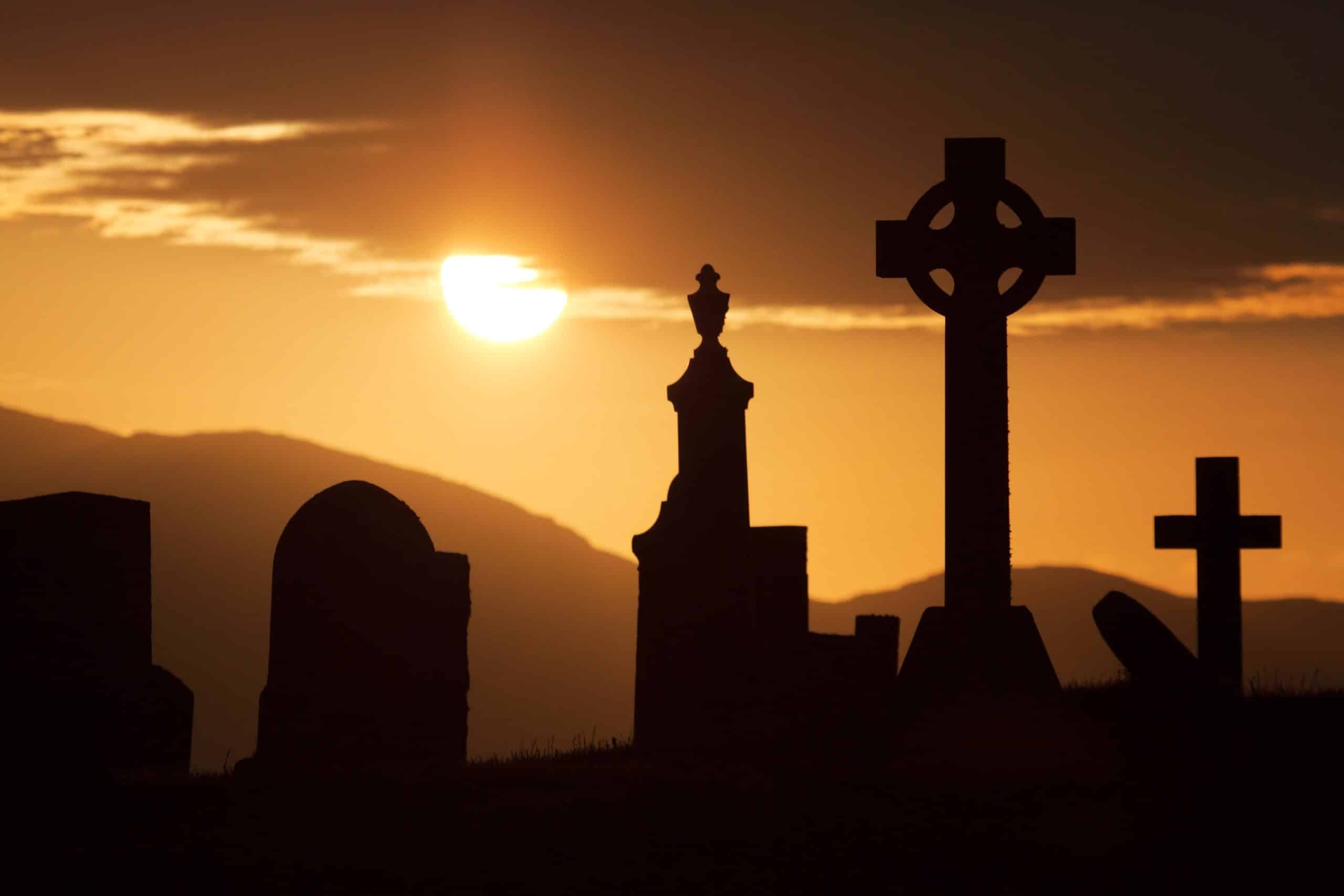
An Irish wake brings people together for a vigil and prayer, with stories, gentle humor, and shared food in a home or at a funeral venue. Irish wake traditions shape how many families honor a life, gather in community, and prepare for burial. Guests include extended family, neighbors, and friends.
The gathering usually occurs within days of death, often before the funeral Mass or service, and may last several hours or span multiple days. Many families also use the Irish terms “tórramh” or “faire” to describe this meaningful vigil, which has roots that are deeply intertwined with Irish folklore and ancient myth.
Today, many wakes take a more modern approach. While these tributes traditionally lasted several days and were hosted at the family’s home, loved ones now often opt to host the event for a few hours at a more formal funeral venue (often with food to follow). Keep reading to learn more about what happens at a wake and Irish wake customs.
Understanding the Irish Wake Tradition
An Irish funeral wake centers the deceased within a circle of kin and community, weaving remembrance with prayer and hospitality. Families value the wake because it allows visitors to express grief, share stories, and support mourners in a setting that welcomes tears, song, and humor. The result blends solemnity with warmth, which eases the burden of loss.
Precise origins of the Irish wake remain debated. Some historians point to older Celtic customs and suggest that celebratory elements, combined with gathering and prayer, emerged over time. Scholars also note that as Christianity spread across Ireland, communities adapted existing Pagan practices by integrating Catholic prayer and ritual.
Many observers view the wake as a cultural bridge, where Catholic rites met older customs that emphasized music, storytelling, and watchfulness through the night. The National Catholic Register explains that the tradition of wakes began with a practical purpose, later evolving to become an essential social ritual in the Irish community.
What to Expect During the Wake
Irish wake tradition is well established and sets forth easy rules to follow with standard expectations.
- Guest List. Family, friends, neighbors, and colleagues are welcome. Many communities view a wake as an open invitation to pay their respects and support the bereaved family, with no formal invitation required.
- How Soon After Death Is an Irish Wake? Families typically hold a wake within one to three days, aligning with funeral scheduling, religious practices, and travel needs for relatives and friends.
- Where Does an Irish Wake Take Place? Wakes historically took place at home. Modern families often host at a funeral home or community venue with space for visitation and quiet reflection.
- How Long Is an Irish Wake? Some gatherings last several hours, while others span two or three days. Scheduling often includes set visitation windows to accommodate work and travel.
- What Happens During the Wake? Visitors offer condolences, share stories, recite prayers, view the body, and sometimes bring food. Music and gentle humor help celebrate a life while honoring grief.
The layout of a wake often includes a seating area for guests to informally gather as they talk and pay their respects. The family typically stands at the front of the room, near an open casket. Guests filter into the funeral home and form a line, making their way to the front of the room to greet the family and offer condolences. It’s common for attendees to stay and mingle with each other or family members before departing.
Cultural Etiquette & What Guests Should Know
Irish wake customs explain several unique gestures you may see. Conservative dress shows respect. Though modern adaptations of the Irish wake are less formal than in generations past, there are still basic rules of etiquette to follow and some things you may wish to prepare for in advance.
- Offer a simple condolence and remain present.
- Expect an open casket.
- Food and drink are often served throughout the vigil, and some families toast the deceased with beer or whiskey.
- Mirrors may be covered, clocks may be stopped, and windows may be opened to symbolize the spirit’s journey.
- Families sometimes pray the Rosary, and many guests depart after the final prayer.
Irish-wake etiquette encourages a balance of reverence and warmth. Visitors laugh at beloved stories, comfort the grieving, and help serve refreshments. These wake visitation traditions honor life while acknowledging loss.
Modern Services for Irish Heritage Families
Irish heritage funeral service practices continue to evolve, particularly in diaspora communities. Some families prefer a single-evening visitation. Others schedule a two-day wake with a formal Rosary on the second evening.
Common elements of a modern wake include:
- Musicians may perform traditional airs.
- Photo displays and memory tables help guests share stories.
- Digital wake elements, such as livestream messages or video slideshows, allow distant relatives to participate.
- Visitation at a funeral home or community venue instead of at the family’s home.
Irish heritage funeral planning may blend American scheduling needs with cherished Irish wake customs, preserving meaning while accommodating travel, work, and school calendars.
Traditional Irish Wake vs. Modern Irish American Wake
| Traditional Irish Wake | Modern Irish American Wake | |
| Location | Family home with continuous vigil | Funeral home or venue with set visitation hours |
| Duration | Often two to three days | Commonly one or two evenings |
| Practices | Storytelling, song, keening, hospitality | Prayers, eulogies, music, photo slideshows |
| Religious elements | Rosary and parish support | Rosary or prayer service by clergy or lay leader |
| Hospitality | Food and drink offered throughout | Catered refreshments or simple reception |
How The Gardens of Boca Raton Can Help
The Gardens offers consultation, coordination, and respectful facilities for families who wish to include Irish wake customs within a funeral service plan. We offer a full range of funeral planning and above-ground burial services to accommodate various cultures and practices.
At The Gardens of Boca Raton, we offer:
- Support that includes scheduling visitation windows, arranging space for prayers and music, and coordinating vendors for food and beverages.
- Above-ground cemetery options, such as community mausoleums, private family spaces, and cremation niches, offer placement choices that suit family tradition.
- Guidance that remains educational and collaborative so families can honor culture with clarity and care.
- A dedicated funeral counselor and financial advisor for each family to best complete the planning process.
- Coordination of body transport, preparation, and securing key documents.
Frequently Asked Questions About Irish Wakes
A wake can feel new to first-time attendees. These answers outline core expectations and help visitors support the family with confidence.
What is in an Irish Wake?
An Irish funeral wake typically includes prayers, visitation, viewing, and condolences. Food, music, poetry, and toasts celebrate the person’s life alongside moments of quiet grief and reflection.
What is wake etiquette?
Dress conservatively. Arrive during posted hours. Silence your phone. Offer condolences to the family. Share a short story or a prayer. Follow the family’s lead throughout the visit.
Do I bring a gift to a wake?
Sending food or flowers helps many families. Some request charitable donations in the person’s name. A thoughtful card always feels appropriate. However, bringing a gift is never required, and attending to pay your respects and offer condolences is always enough and appreciated.
Who usually goes to a wake?
Attendance often extends beyond immediate family. Friends, coworkers, neighbors, and community members attend to pay respects. Public visitation times make participation simple and inclusive. Anyone who knew the deceased or knows the family and wishes to pay their respects is typically welcome.
How much money should I give at a wake?
When a family invites charitable donations, amounts vary by means and relationship. Many guests consider a contribution of around $100 appropriate when able.
How long is an Irish wake?
Traditional wakes in Ireland sometimes lasted several days. Many families today schedule shorter visitation windows at a funeral home. A 30 to 60-minute visit is acceptable for guests.
Why is it called a “wake”?
Folklore describes long-ago watchers keeping vigil near the body, ready to notice signs of life. Historians consider this story a myth, though it is very much alive in Irish folklore. The word survived as a name for the vigil that we now know as the Irish wake.
Contact Us to Plan a Cultural Funeral Service
An Irish funeral wake balances prayer, story, hospitality, and community support. Guidance, space, and gentle coordination help that balance feel natural.
To explore options that respect Irish wake customs while supporting your family’s needs, contact The Gardens of Boca Raton for a compassionate consultation.
Editorial Disclaimer
I have personally researched and written the content contained in this publication using sources I believe to be reliable and accurate. The information presented reflects my own authentic observations, interpretations, and reflections. AI assistance is used solely to help organize, format, and refine the final presentation of this work.
— Marshall Jacobs